
If you need to sell a house with septic problems in the Bay Area, a failed inspection or aging drain field can make the process feel uncertain. Homes in parts of Marin, Contra Costa, Santa Clara, Sonoma, and other less urban areas may rely on onsite wastewater treatment instead of a public sewer.
A septic concern does not automatically make a home unsellable. The practical question is whether to maintain or repair the system, replace it, list with clear disclosures, or sell as-is to a buyer prepared to handle the work after closing.
Why Septic Problems Can Complicate a Bay Area Sale
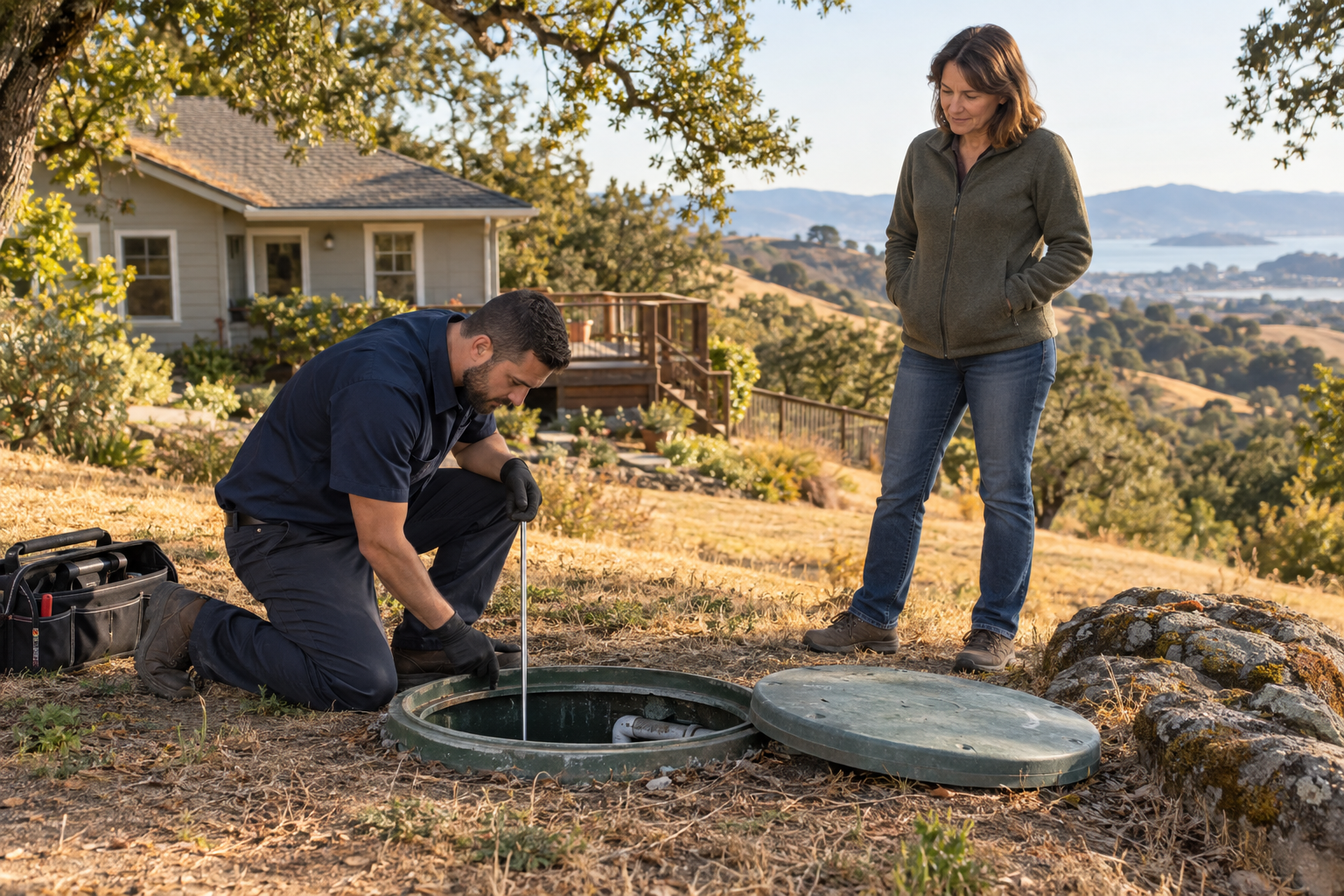
A septic system stores solids in a tank and sends liquid wastewater into a drain field, where soil provides treatment. The tank, piping, pumps, treatment equipment, and disposal area all need to work together. Hillside lots, small parcels, seasonal groundwater, old records, and limited replacement space can add uncertainty.
The California State Water Resources Control Board places failing onsite wastewater treatment systems in its corrective-action tier. Warning signs can include:
- Wastewater backing up into plumbing fixtures
- Effluent or unusually wet soil appearing above the system
- Broken tanks, lids, baffles, pumps, or connecting pipes
- Strong odors, slow drains, or repeated pumping needs
- An inspection showing the drain field is not accepting water properly
- Missing permits, plans, maintenance logs, or a known reserve area
Some symptoms have simple causes; others point to a costly repair. Avoid promising a solution until a qualified professional and the local permitting agency have reviewed the facts.
How to Sell a House With Septic Problems in the Bay Area
1. Gather the property and septic records
Collect permits, system drawings, pumping receipts, maintenance agreements, inspection reports, and correspondence with the county. Ask the local environmental health department what it has on file. Confirm the approximate age, tank location, drain-field location, design capacity, and whether an alternative treatment unit requires ongoing service.

2. Get the right inspection before choosing a path
A general home inspection is not the same as a septic evaluation. Ask a qualified local septic professional what the evaluation includes and whether the county requires a particular form or procedure. A useful report may address the tank, pumps, alarms, distribution components, visible setbacks, and the drain field.
Do not authorize major excavation solely to make a listing look cleaner. First understand the diagnosis, permit path, realistic schedule, and effect on your likely net proceeds.
3. Compare repair, traditional listing, and as-is options
- Maintain or make a limited repair: Pumping, replacing a pump, or correcting a damaged component may be enough when the disposal field is still functional.
- Replace or redesign the system: This may improve marketability, but design work, soil testing, permits, contractors, and inspections can extend the timeline.
- List with disclosures: A traditional buyer may proceed with a price adjustment, credit, contingency, or escrow arrangement.
- Sell directly as-is: A cash buyer can evaluate the current condition and price the septic risk into the offer without requiring you to finish the work first.
For a broader decision framework, read our guide to selling a Bay Area house as-is and compare a cash buyer versus a Realtor.
Permits and Local Rules Matter
California uses a statewide, risk-based policy for onsite wastewater treatment systems, while local agencies usually administer permits through approved local programs. Rules can differ by county and by site conditions. Systems near certain impaired water bodies can face additional requirements, and a failing system may require corrective action.
Marin County, for example, handles property evaluations, permits for new and replacement systems, complaints, and questions during property sales. The county advises owners to understand the condition and status of the system and to contact Environmental Health early. Other Bay Area counties have their own processes, so verify the requirements for the property address.
Why Traditional Buyers and Lenders May Hesitate
Buyers may worry about sanitation, repair cost, remaining system life, future expansion, and whether a replacement field will fit. A lender, insurer, or appraiser may also ask for more information when the problem affects habitability or value. Even a willing buyer can request extra inspections or leave the deal if a contingency is not satisfied.
Clear records and realistic expectations reduce surprises. They also help you compare offers by net proceeds and certainty instead of headline price alone.
When an As-Is Cash Sale Can Make Sense
A direct cash sale may fit when the system needs major work, records are incomplete, the home has other deferred maintenance, or you cannot wait through design and permitting. The buyer should inspect the property, explain the offer, and avoid requiring cosmetic work or open houses.
Before accepting, compare the offer with the likely listed price minus repairs, commissions, credits, holding costs, and the risk of a delayed or failed escrow.
Quick Seller Checklist
- Request county records and locate the tank and drain field.
- Gather pumping, maintenance, permit, and inspection documents.
- Get a written diagnosis and separate estimates for repair and replacement.
- Confirm local permit requirements and likely timing.
- Discuss known-condition disclosures with a qualified California professional.
- Compare a traditional sale with a firm as-is cash offer.
FAQ
Can I sell a Bay Area house with a failed septic system?
Often, yes, but the sale should account for known conditions, local corrective-action requirements, and the buyer’s ability to complete permitted work. Get address-specific guidance before promising a repair or closing date.
Do I have to replace the septic system before selling?
Not in every situation. The answer depends on the system condition, local rules, the purchase contract, and the buyer’s financing. Some homes sell with a repair, credit, escrow arrangement, or as-is cash offer.
Should I pump the tank before an inspection?
Ask the inspecting professional first. Pumping can be part of a proper evaluation, but timing and documentation matter. An empty tank alone does not prove that the drain field works.
Get a Cash Offer for a Bay Area Home With Septic Issues
If you want to sell a house with septic problems in the Bay Area, We Buy Properties in Bay Area can review the property in its current condition and make a direct as-is cash offer. No open houses, no cosmetic repair list, and no waiting for a buyer’s lender to become comfortable with the septic work.
You can sell a house with septic problems in the Bay Area without guessing your way through the decision. Start with records and a qualified evaluation, confirm the local rules, and compare the full cost and certainty of each sale path.
Useful references: the California State Water Resources Control Board OWTS policy, Marin County septic-system guidance, and Marin County’s property-sale and septic planning guidance.