If you need to sell a Bay Area house with roof problems, you are not alone. Older roofs, storm wear, past leaks, missing shingles, clogged gutters, and aging flashing are common in Bay Area homes, especially properties near the coast, on hillsides, or under mature trees.
A roof problem does not automatically stop a sale. It can, however, change how buyers look at the house, what gets negotiated after inspections, and how long escrow feels. The right path depends on the roof condition, your timeline, repair budget, and how much uncertainty you want before closing.
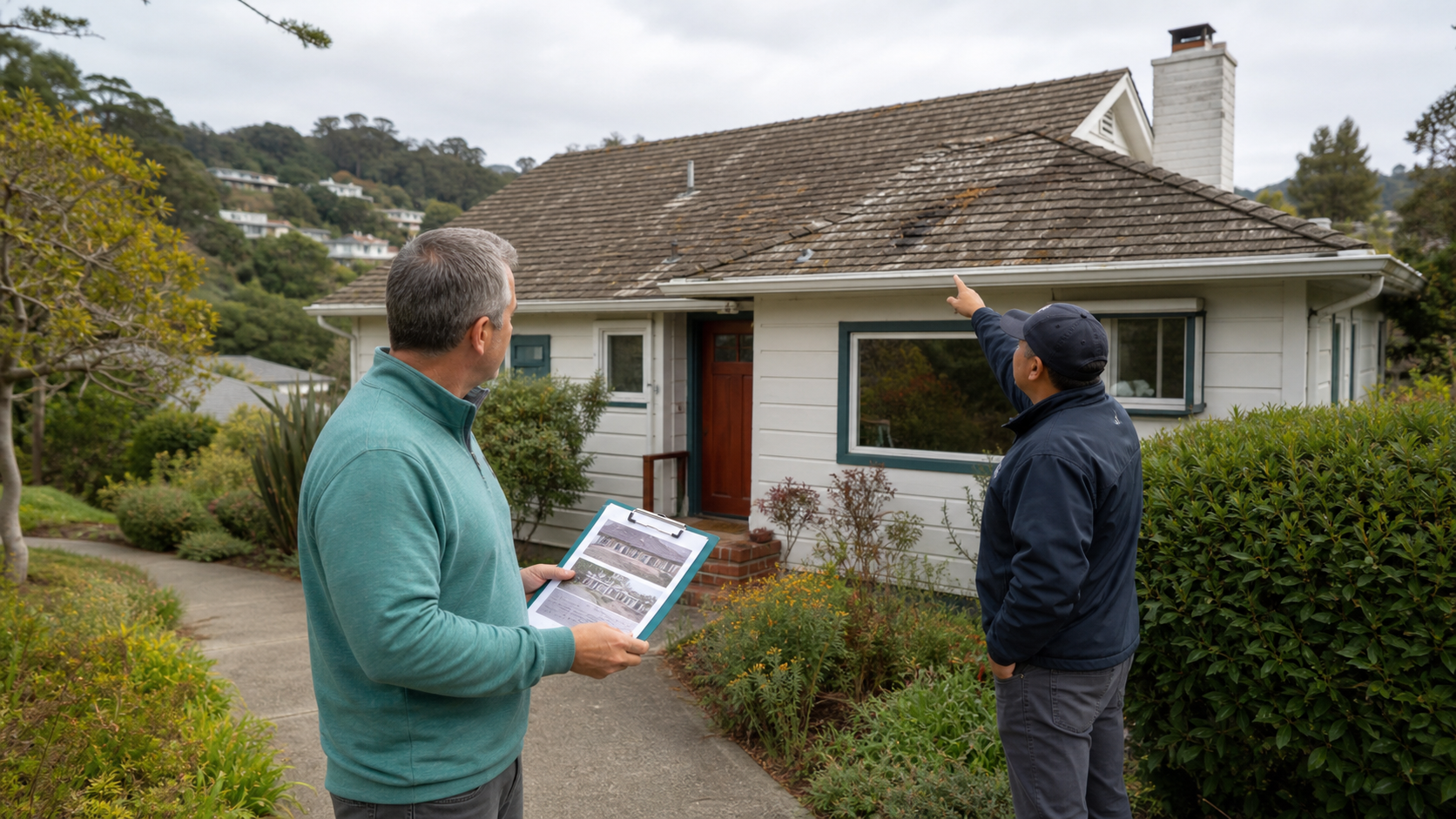
What Counts as a Roof Problem When Selling?
Buyers usually care about roof issues because they connect to cost, water intrusion, insurance, and habitability. Some concerns are minor. Others can lead to major credits, contractor bids, or a buyer backing out after inspections.
Common roof issues include:
- Active leaks or past water stains on ceilings
- Missing, cracked, curled, or worn shingles
- Old flat roofing, tar-and-gravel systems, or membrane wear
- Loose flashing around chimneys, skylights, or vents
- Dry rot around fascia, eaves, or gutters
- Poor drainage, ponding water, or clogged gutters
- Roof age that makes buyers expect replacement soon
The California Department of Real Estate reminds buyers that inspections often cover the roof, foundation, plumbing, electrical, HVAC, and other major systems. That means even if your roof problem is not obvious during a showing, it may still become a major negotiation point later.
Can You Sell a Bay Area House With Roof Problems As-Is?
Yes, many sellers can sell as-is. “As-is” generally means you are not agreeing to complete repairs before closing. It does not mean you can hide known problems. In California, sellers should be careful with disclosures and should ask a qualified professional when they have questions.
The DRE describes the Transfer Disclosure Statement as a seller-completed disclosure covering the physical condition of the property and potential hazards or defects. If you know about leaks, roof repairs, insurance claims, contractor reports, or recurring water intrusion, gather the paperwork before you choose a sale strategy.
For homes in high or very high fire hazard severity zones, California Civil Code section 1102.6f also calls out certain wildfire-related disclosure items, including untreated wood roof coverings, roof ventilation details, missing roof flashing, and gutter conditions. This can matter in parts of the Bay Area where fire hardening and insurance concerns are already on a buyer’s mind.

Should You Repair the Roof Before Listing?
Repairing before listing can make sense if the work is limited, affordable, and easy to document. But full roof replacement can be expensive, disruptive, and hard to justify if you are selling soon.
Before spending money, compare:
- The cost of repair or replacement
- How long the contractor schedule will delay your sale
- Whether permits or inspections are needed
- Whether the repair will actually raise the sale price
- How likely buyers are to ask for additional credits anyway
- Your holding costs while work is being completed
If you do hire a roofer, verify licensing and insurance. The California Contractors State License Board has consumer guidance on finding licensed contractors, including how to confirm whether a license is active. For roofing work, that step matters because poor repairs can create new buyer-confidence problems.
How Roof Problems Affect Traditional Buyers
A traditional buyer may still love the property, but roof issues can make the process less predictable. After inspection, the buyer may ask for a price reduction, repair credit, escrow holdback, contractor access, or seller-paid repairs before closing.
Insurance can be part of the conversation too. The California Department of Insurance explains the difference between replacement cost and actual cash value in property claims. Sellers who have had roof damage, partial repairs, or claim history should understand what documentation they have and what has actually been completed.
None of this means you cannot list. It means you should expect questions and prepare clear answers.
Documents to Gather Before You Sell
A little organization can reduce stress. Before choosing your sale route, collect any roof-related records you can find:
- Roof inspection reports
- Repair or replacement estimates
- Receipts, warranties, and contractor invoices
- Photos of known problem areas
- Insurance claim paperwork, if applicable
- Permit or final inspection records, if available
- Notes about when leaks appeared and what was done
Being upfront does not mean overexplaining every concern in a showing. It means having a clean file so buyers, agents, escrow, and advisors can understand the situation quickly.

When a Cash Offer May Be Worth Comparing
A direct cash offer can be useful when the roof issue is paired with a tight timeline, limited repair budget, vacant property, inherited home, tenant situation, or other repairs. Instead of paying for a roof before listing, compare your likely net proceeds against an as-is offer.
This is especially helpful if you want to avoid repeated showings, contractor coordination, open-ended buyer repair requests, or a late escrow cancellation. You can also review our guides on selling without making repairs, selling a fixer-upper, and questions to ask a direct buyer.
FAQ: Selling a Bay Area House With Roof Problems
Do I have to replace the roof before selling?
Not always. Some sellers repair the roof, some list as-is, and some compare a direct cash offer. The best choice depends on the cost, timeline, buyer pool, and your desired certainty.
Will roof leaks scare buyers away?
Some buyers may walk away, but others may proceed if the issue is documented and priced realistically. Clear records and realistic expectations can help reduce surprises.
Can a cash buyer purchase a house with roof problems?
Often, yes. A cash buyer can review the roof condition, repair estimates, and overall property condition, then decide whether to make an as-is offer without requiring seller repairs.
Roof problems can feel like they take over the sale, but they do not have to leave you stuck. With the right documents, realistic pricing, and a clear comparison between repairs, listing, and selling as-is, you can choose the path that fits your timeline. When your goal is to sell a Bay Area house with roof problems without extra delays, a local cash offer may be worth reviewing before you spend money on the roof.