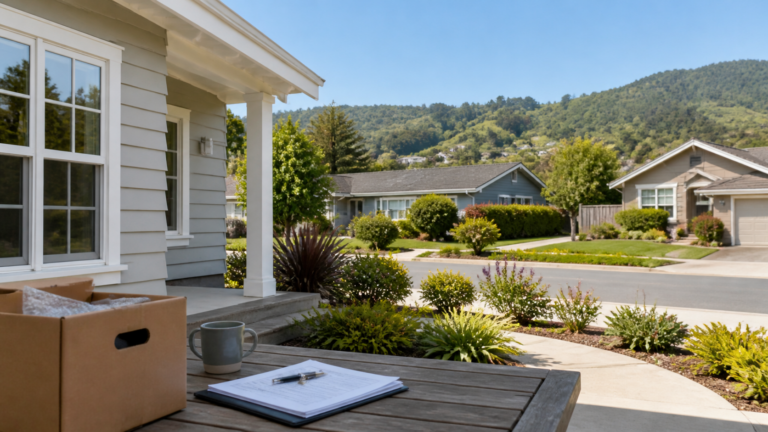
Selling a Bay Area house with a private well raises a different set of questions from selling a home connected to municipal water. Buyers want to understand where the water comes from, how the system performs, and what records support its condition.
For a rural Sonoma County home or another Bay Area property outside a public water service area, preparation starts with the well file. You do not need to promise a perfect system. You need a clear account of what is known, what needs professional review, and how those findings affect your sale options.
1. Gather Records for Your Bay Area House With a Private Well
Locate the well completion report, permits, pump invoices, maintenance history, and previous water-quality results. Add records for storage tanks and treatment equipment. Note whether the well supplies drinking water, irrigation, or both; avoid assuming every pipe serves the same purpose.
The California Department of Water Resources’ well completion report search provides a starting point when the original drilling record is missing. Match the report to your property carefully, and ask for help if the location or details are unclear.
Build a simple folder containing:
- Well construction and available permit records.
- Water-test reports with dates, sampling locations, and laboratory details.
- Pump, pressure-tank, and treatment-system service invoices.
- Notes about interruptions, seasonal shortages, or delivered water.
- Any shared-use agreements and agency correspondence.
A construction report describes historical work. It does not, by itself, establish the well’s current condition.
2. Check Water Quality With the Right Testing
Clear water and familiar taste cannot establish drinking-water quality. The California State Water Resources Control Board recommends annual testing for domestic wells. For sale planning, discuss existing results and the appropriate testing scope with your local environmental health department and a certified drinking-water laboratory.
The EPA’s private-well guidance recommends annual checks for total coliform bacteria, nitrates, total dissolved solids, and pH. It also advises additional testing when conditions change, after system repairs, or when other contamination is suspected. Local groundwater conditions may call for additional analyses.
Ask the laboratory how samples should be collected and whether testing should address untreated water, treated water, or both. Keep the complete results, including the sample date and location. A kitchen-tap result after filtration should not be presented as an untreated-well result.
If a result raises a health concern, contact environmental health for guidance on water use and next steps. Do not choose treatment solely from a sales brochure.

3. Separate Water Quality From Supply and Equipment
A laboratory report does not measure how reliably the well supplies the household. Ask a qualified well professional whether a performance evaluation is appropriate and what it will cover. Useful questions include pump condition, pressure behavior, available storage, and the limitations of any yield test.
Share your actual experience: periods of weak pressure, pump repairs, dry-season interruptions, or water deliveries. Include dates where possible. A short test or a good wet season should not become a promise of unlimited year-round supply.
For example, a seller may have a recent laboratory report but an older pump and no recent performance records. Those are separate issues. Ask for a written assessment before deciding whether equipment work would help the sale.
4. Clarify Buyer Questions Before Escrow
Confirm address-specific requirements with the county or other responsible authority before promising repairs, a replacement well, or a closing schedule. Ask your agent or California real-estate attorney which disclosures and documents your transaction needs.
If another property shares the well, gather the agreement and clarify access, maintenance responsibilities, and costs with the professionals handling the sale. Our easement and shared-access guide covers that separate document issue in more detail.
Ask a financed buyer to confirm lender requirements early, including any required testing and report timing. An older report may be useful background without satisfying the buyer’s current needs. Put responsibility for additional evaluations and agreed work in writing.

5. Compare a Listing With an As-Is Cash Offer
List with a clear well file
A traditional listing may suit a home with documented water quality, understandable maintenance needs, and time for buyer review. Ask your agent to compare properties with similar water arrangements. Avoid applying a universal price discount simply because the house has a well.
Compare the written cash-offer terms
An as-is cash offer may be useful when you would rather sell than manage equipment work or further investigations. The buyer may still inspect the well and evaluate its records. Confirm contingencies, deposit terms, closing costs, and who handles any agreed work.
Compare expected proceeds after repairs, credits, selling expenses, and the cost of owning the home until closing. Our cash buyer versus Realtor guide explains the broader trade-offs. Review what happens after accepting a cash offer before setting your moving date.
Frequently Asked Questions
Can I sell a house with a private well?
Yes. A private well does not automatically prevent a sale. The condition, available records, applicable requirements, purchase agreement, and buyer’s financing all influence the process.
Does a water test prove the well will not run dry?
No. Water-quality testing checks the sampled water for specified substances. Supply and equipment require separate evaluation, and a test does not guarantee future performance.
Should I replace the pump before listing?
Get a professional diagnosis first. Compare the proposed work, cost, and timing with your sale options. An older pump alone is not enough information to choose replacement.
Get a Cash Offer With Your Well Records Ready
If you are selling a Bay Area house with a private well, start with the records you have and a realistic view of your next step. We Buy Properties in Bay Area can review the property’s current condition and discuss an as-is purchase.
Request your no-obligation cash offer and tell us about the well, available reports, and the timeline you need.