
Learning how to sell a house with an ADU in the Bay Area starts with more than counting bedrooms. Buyers may want to know whether the unit was permitted, how utilities are arranged, whether anyone occupies it, and which records support the way it is described.
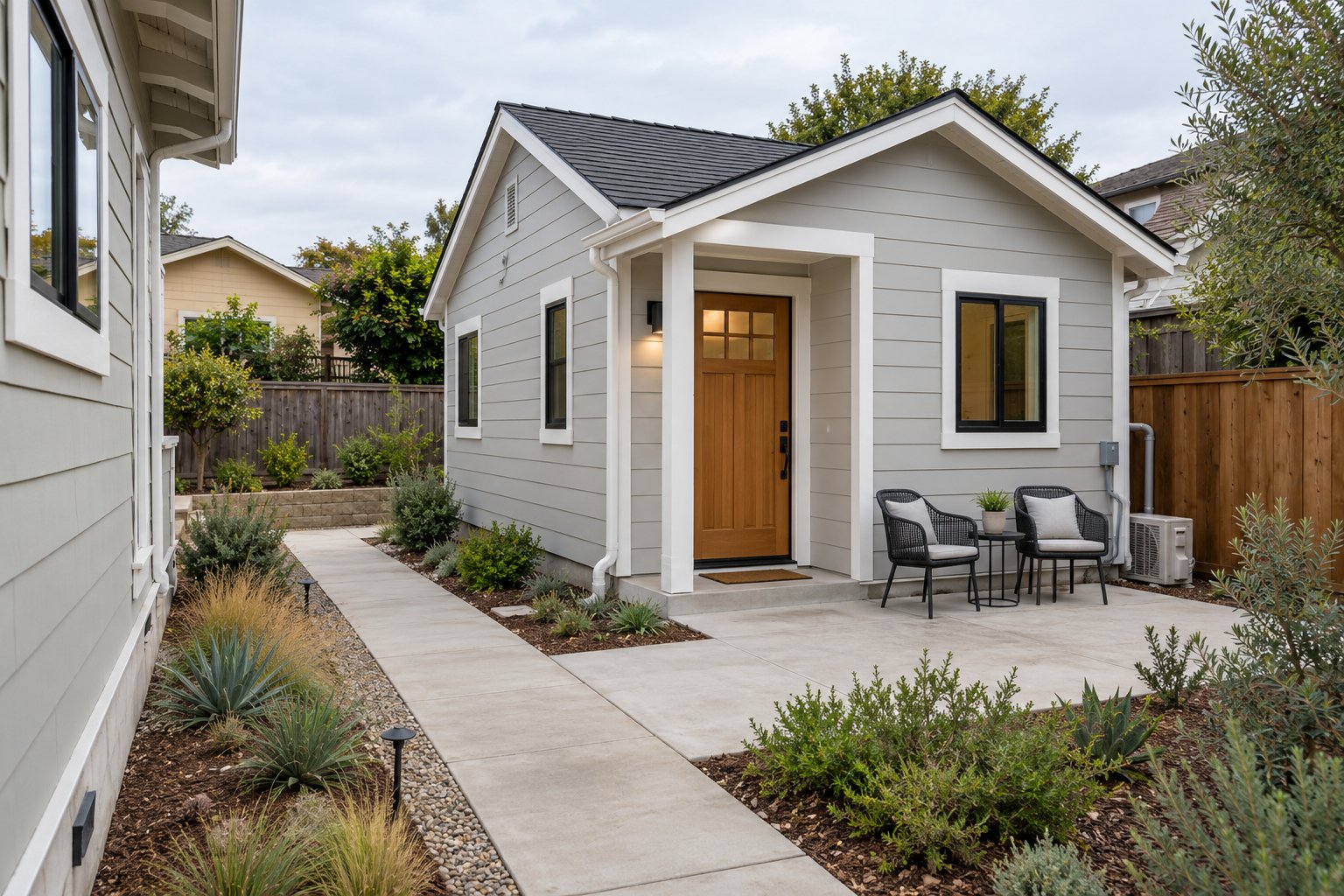
An accessory dwelling unit can be detached, attached, or created within existing space. Whatever its form, the practical goal is the same: describe what you actually have, organize the evidence, and compare sale options without promising more than the records show.
1. Document the Property Before You Sell a House With an ADU in the Bay Area
Start with the documents you already have. Look for approved plans, building and trade permits, final inspection records, certificates or notices from the jurisdiction, contractor invoices, warranties, surveys, and earlier listing or appraisal materials. Keep original records intact and work from copies.
Write down what you know about the unit: when it was created, whether it is attached or detached, how it has been used, and which systems it shares with the main house. Do not call a space a legal ADU simply because it has a kitchen and bathroom. Likewise, missing paperwork does not by itself prove that the work was never approved.
The California Department of Housing and Community Development’s ADU resources and March 2026 handbook explain current state terminology and recognize detached, attached, and converted-space configurations. Local records and property-specific facts still matter, so confirm questions with the city or county that has jurisdiction.

2. Verify Permits, Utilities, and Physical Condition
Ask the local building or planning department how to obtain the permit history and approved plans. Compare those records with the present layout. If walls moved, a garage became living space, or a kitchen or bathroom was added later, avoid guessing about approval. Our guide to selling a Bay Area house with unpermitted work explains how to organize a broader permit question.
Next, identify how water, sewer, gas, electricity, heating, internet, and waste service reach the unit. Note whether meters, panels, water heaters, shutoffs, and mailing addresses are shared or separate. Describe the arrangement accurately rather than implying that separate billing or future subdivision is guaranteed.
Include the ADU in the property-condition review. Check visible roofing, drainage, windows, appliances, ventilation, smoke and carbon-monoxide alarms, exterior paths, and signs of moisture or deferred maintenance. Use qualified professionals for concerns outside your experience, and keep their reports with the sale file.
3. Clarify Occupancy, Rent, and Access
If someone lives in the ADU, gather the signed lease, amendments, payment ledger, deposit records, notices, utility agreements, and any written house rules. Tell your agent or California real-estate attorney whether the occupant is a tenant, family member, caretaker, guest, or former tenant. The label you use casually may not determine the person’s legal rights.
Do not promise vacancy, change locks, remove belongings, or serve a notice without transaction-specific advice. State and local tenant rules can affect timing and buyer expectations. Our tenant-occupied property guide provides a starting point for the broader sale process.
Buyers may also ask how occupants reach the unit, where they park, which outdoor areas they use, and who maintains shared spaces. Record the current arrangement without promising that a buyer can continue, expand, or change the use after closing.
4. Prepare Accurate Disclosures and Buyer Information
California sellers should discuss required disclosures with their real-estate or legal professional. The California Department of Real Estate’s Disclosures in Real Property Transactions guide explains the Transfer Disclosure Statement and other disclosure considerations. Selling as is does not remove applicable disclosure duties.
Create a clear ADU handoff folder with:
- Approved plans, permits, inspection records, and available jurisdiction correspondence.
- Utility layouts, service bills, warranties, repair invoices, and professional reports.
- Lease and deposit records when occupied, shared-space arrangements, and keys or access devices.
Keep each document labeled for what it is. An estimate is not completed work, a permit application is not final approval, and an old listing is not proof of today’s condition. Accurate labels help buyers and their advisers perform their own review.
5. Compare Listing, Corrective Work, and an As-Is Sale
A traditional listing may make sense when the records are clear, the unit is in good condition, and you have time for buyer inspections and financing. If a permit or repair issue needs attention, get written guidance and estimates before committing to work. Confirm what the proposed scope would resolve and what would remain uncertain.
An as-is cash offer may be worth comparing when you do not want to manage corrections, tenant coordination, or a long preparation period. Compare net proceeds, contingencies, closing costs, timing, and responsibility for the ADU—not only the headline price. Our cash buyer versus Realtor guide outlines the broader tradeoffs, and our process page explains the steps in a direct sale.
Frequently Asked Questions
Can I sell a Bay Area house with an unpermitted ADU?
Potentially, yes, but the permit history, present condition, disclosures, buyer expectations, and lender or insurance requirements can affect the path. Verify the records and obtain property-specific professional advice before choosing corrective work or an as-is sale.
Does an ADU always increase the sale price?
No fixed increase applies to every property. Buyers may consider condition, approval history, layout, privacy, access, utility arrangements, occupancy, and market demand. Ask for property-specific pricing evidence rather than assigning a value from construction cost alone.
Can I sell while a tenant lives in the ADU?
A sale may be possible with an occupied ADU, but the lease, local protections, notices, deposits, access for showings, and the buyer’s plans require careful handling. Consult the professionals managing the transaction before making promises to either party.
Request a Cash Offer for Your Bay Area Property
When you need to sell a house with an ADU in the Bay Area, organized records and accurate descriptions make every option easier to compare. You do not need to solve every uncertainty before asking what an as-is sale could look like.
If you prefer to avoid repairs, permit projects, or a lengthy listing process, request a no-obligation cash offer from We Buy Properties in Bay Area. Tell us what you know about the main home, the ADU, any occupancy, and your preferred timeline so you can review a written option without pressure.